(versão em português aqui)
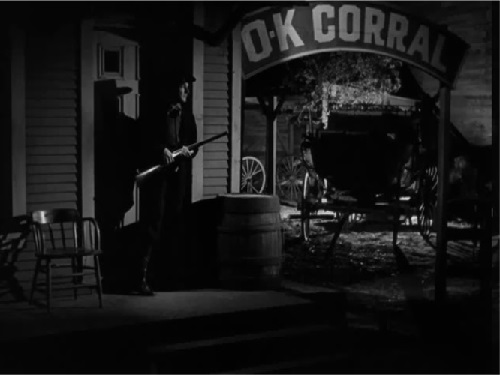
Article originally published in the online book Allan Dwan: a dossier (2013), edited by Gina Telaroli and David Phelps, whom I will always thank for both the invitation and trust (as well as cleaning up my translation). The complete book remains available at the Spanish magazine Lumiere and it is still the most complete critical study published on the American cinema pioneer. This is mostly on 1939’s Frontier Marshal, but tries to place it through larger tendencies of Dwan’s filmmaking.
Allan Dwan never hid his taste for comedy. It’s not unjust to say that, something like Howard Hawks, he is a filmmaker who express himself in a manner that is essentially comic. We need, however, to understand that comedy according to Dwan is not a matter of jokes or lighter treatment of minor subjects (as Peter Bogdanovich suggests when dealing with the 50s films in his The Last Pioneer), but the formation of a certain perspective. It is a style that reaches its peak in the pre-code days (ironically, one of the filmmaker’s least productive phases), a style which Dwan was one of the few to continue employing later. A good example of can be seen in his most famous postwar film, Silver Lode, whose script might at first suggest a B movie High Noon knock-off. Dwan’s own point of view, however, skews things in another direction. The series of misfortunes, often exacerbated by bad timing, piling up over an wrongly accused man (John Payne), making even his most plausible explanations seem suspicious, suggest something much closer to a screwball comedy like Bringing Up Baby, which, after all, is also basically about a man whose perfect life is systematically destroyed by another person’s will.
Continuar lendo →







 Anotacões de um Cinéfilo