

I’ve been publishing a version of this list for 15 years now and I have to admit that for the last five at the beginning of December I’ve always wondered “should I retire the list?”. When I started it in 2008 along the lines that I still follow today (films from the last three years, seen for the first time during the year), my desire was to center it on my personal experience and leave aside the rules of the business as much as possible, something which was bound to fail to some extent. The logic that guides current film discourse ensures that in the end everything ends up somewhat commodified, a plague that is increasingly difficult to avoid.
I remember filmmaker Pierre Leon proposing that we should give new films some distance to settle away from the discourse around them and maybe we should indeed watch and ponder about the films of 2023 in 2028, it would be fairer to them and healthier for us. For my part, I like making lists, I like the ludic side of cinephilia that they represent, and although I have sympathy for the arguments about the limits and issues of canons, it seems to me that the best answer to them is to imagine a more wide-ranging gaze towards cinema and that is something that easier done through practice.
Which brings me to the other reason why, despite my misgivings, I persist with this exercise, I like movies and I like to highlight cherished films, which is one of the reasons I insist on keeping these lists fat, and criticism in its many versions (as there are as many kinds of criticism as there are worlds of cinema, after al(), tend to narrow them down, most of the time we talk about the same movies, this list certainly includes many of those, but I hope that some others such as The Temple Woods Gang, My Falcon, The Last Days of Humanity, Raid on the Lethal Zone or Boston Johnny will benefit a little from being included here. If any reader decides to give one of them a shot, the hours I’ve devoted to this list will be well justified. I love them all, but they lack the promotion muscle of others or yet to be in tune with the preferences of festival programmers. Part of the current film critic’s job seems to me to be trying to break down these barriers as much as possible.
Speaking of canons, my favorite critical text of 2023 was specifically about lists and canons: the editorial of the great new journal Lucky Star, written by Jhon Hernandez. It’s about what we can expect from criticism and formative perspectives today and it benefits greatly from Hernandez observing this as a true outsider, that the piece doesn’t come from a desire of belonging is what gives it its strength. We must imagine more cinematic bridges that work beyond the more established methodologies.
One of the most positive developments in recent years in Western cinephilia is the increased interest in Indian popular cinema, since it has emerged quite apart of the usual mediators and even within the industry it comes much more from a need to serve the Indian audience in the West. My own reservations about the subject come from my fear of ending up mystifying a culture I know very little about, but I’ve been trying my own steps even though I remain much more comfortable talking about Chinese or Japanese popular cinema. I also feel guilty that I saw very few new short films in 2023 and it seems symptomatic that my favorite of them is Pedro Costa’s The Daughters of Fire, an appendix to a future feature film project.
Two events at both ends of the film industry seemed to me to be pivotal for the year. In the small world of festivals, Carlo Chatrian was dismissed from the Berlin Film Festival. Chatrian is very close to parts of the critical milieu and well-liked by filmmakers (there was even a petition to defend him packed with big names), since he was in charge of Locarno he has been known for aiming for films that are a little fresher and outside of the more standard structures of the international film circuit and it’s fair to say that his work has been discontinued because he actually did improve the event and the only people who seem pleased about his dismissal are those who would rather prefer a festival that is even more focused on the red carpet. On the other hand, in an ideal world, I probably wouldn’t recognize Chatrian’s name as well as those of the people in charge of Cannes and Venice or smaller events like Cinema du Reel. I may sound self-serving, but for all of film criticism’s many faults (and believe me, we do very little to deserve more attention), film culture has not benefited from the shift over the last 15 years towards the figure of the curator over the critic.
Films should matter much more than events and this is not always possible with the way they are so centered in contemporary film culture. Chatrian did as good a job as one could hope for within the structures of the contemporary film festival, but his work still has to exist within these structures, and that he won’t continue beyond the next edition reinforces that they aren’t even ready to deal with any kind of reformism. The economy of the modern film festival requires a fairly standard consensus space, which is why the three major European film festivals are distinguished today only by their attention to local industries and by how their specific dates help to delimit the films that seek to premiere at them.
Film festivals are conservative venues that are closely tied to the logic of the smaller world film market, something that gets worse the bigger and more influential the event happens to be, and it would probably be useful to think of them more as places for diffusion than as something that helps to mediate a vision of cinema. At the beginning of the month, Mubi Notebook published a good article by A.E. Hunt that deals with a lot of this issue from a more intimate perspective.
Leaving the world cinema market and moving on to the American film industry, the concurrent strikes of actors and screenwriters contributed to thinking about cinema from a more labor-related point of view. Including, I would say, some of the contradictions inherent in thinking about artistic creation on an industrial scale that most of the time we shy away from dealing with. The strike helps to underline how almost all the trends in the industry in recent years, following the direction of contemporary capital, are designed to make work more precarious. The material conditions in which films are made matter and one of the consequences of the people who make films being treated with less and less respect is that films become even more of an amorphous, meaningless series of images to be aired on TV.
I remember, about 25 years ago, Kent Jones commenting that the old idea of the genius of the system had mutated so that you had to be some kind of genius to make a worthwhile movie within the system and these are the times we’re nostalgic for now. Mark Asch wrote a very good article this week for Filmmaker Magazine that thinks about the year of cinema from the idea of labor. I would also highly recommend the April issue of Cahiers du Cinema, which includes a very valuable dossier on current American cinema, it’s pre-strike, but what’s so interesting about the collection of articles and interviews is how the films are approached from a very materialist regional perspective, Hollywood as a consequence of Los Angeles and the structures around it, which gives it a rare freshness as an exploration of the film industry.

Which brings me back to one more controversy of the year that somehow brings the two themes closer together: the open letter that Spanish filmmaker Victor Erice published about the screening of his film Close Your Eyes at Cannes this year. At first it’s not the most interesting story, a veteran filmmaker moaning about not receiving the privileged treatment he expected from an event that has consistently highlighted him in the past. And anyone who wants to call Erice a whiner will be partly justified, but between a great filmmaker like him and a slimy bureaucrat like long-time Cannes director Thierry Fremaux, I tend to at least listen to the artist more, and his central gripe that the festival had effectively hoodwinked him into screening the movie there is one that deserves some consideration.
Cannes famously doesn’t screen Netflix movies, but Fremaux is not unlike the platform’s president Ted Sarandos in that he sees the artist as a content provider whose main job is to bring movies to the city’s annual film fair. The Spanish master’s first feature in three decades is intriguing enough for the event’s cinephile base to push the boundaries to secure it, but it doesn’t have enough attractive names for the industry to get the exposure the director himself was hoping for. It’s a deeply cynical vision of how cinema should work, one that very much devalues those who matter (Close Your Eyes, Erice and his many very talent collaborators) and one that undermines what really counts, which are the films while guaranteeing some nice headlines for the event itself.
I thought I would just write a couple of paragraphs and ended up with a small piece so let’s get down to business. These are 100 films following my personal criteria, over 45 minutes running time and first public screened between 2021 and 2023 and I first watched them throughout 2023. The order is rather arbitrary, I certainly prefer the 21st. to the 45th, but I don’t know if I prefer it to the 26th and so on.
Before I begin, I’d like to also make a mention of José Mojica Marins’ The Plague, which I don’t feel comfortable counting as a new movie since it exists across time between the early 1980s and the current decade, but which is a true film happening.
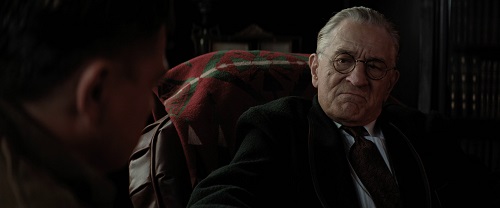
100) Killers of the Flower Moon (Martin Scorsese)
Let’s start with the year’s biggest worthwhile event. I don’t particularly think Killers of the Flower Moon work, but its paralysis in the face of how to keep account of a very bleak page of early 20th century United States history of violence is staggering in its own right. Sometimes after all, a movie is worth it by its flaws as much as its good parts. The industry appointed greatest living filmmaker turns what was on page a white savior story into a white guilt one, so keeping with the preferred fashions of the day (it of course still stars Leonardo Di Caprio), but what is really good about it, is what is always good on the artist work: Scorsese excitement and skill at filming corruption. This movie is great at evil gestures, it understands its forms and it is often terrified about how to show it in a responsible manner. Lily Gladstone is great even if the movie, and to be honest, a lot of its reception, seem to be tempted to turn her into a symbol.
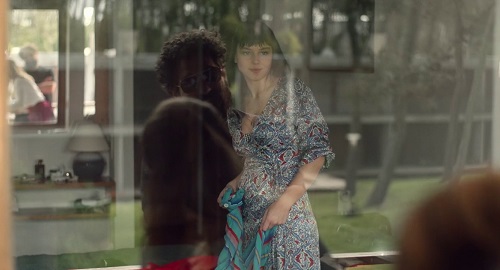
99) Living Bad/Viver Mal (João Canijo)
João Canijo is a talented Portuguese filmmaker who has received little attention abroad. This year that changed some because he had an ambitious two-film project that was screened in Berlin, two movies set in the same family hotel, one focusing on those who stay there called Bad Living and this one on the temporary guests. It’s the kind of concept film that is necessary to help a director to break down industry barriers. They are both good and Living Bad is the one that didn’t make it into the competition, but I think it’s a bit more focused, so I’m including it here.
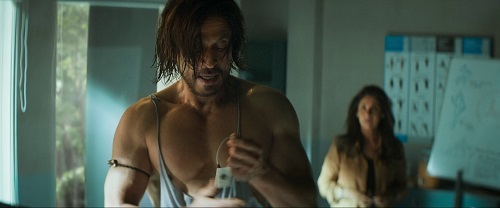
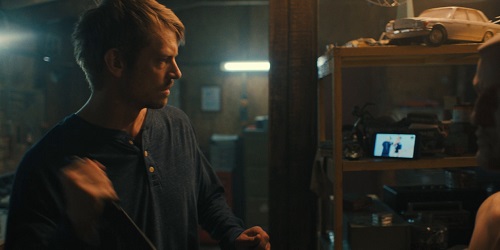
97) Pathaan (Siddharth Anand) and Silent Night (John Woo)
Two action movies about their own stylistic excesses. Pathaan was Indian superstar Shah Rukh Khan’s first film in several years, and Silent Night was Hong Kong master John Woo’s return to American cinema. They focus on their hyper-stylized imagery, pure fluff in Pathaan and Catholic torment in Silent Night. The Indian film is like the best of the Roger Moore-era James Bond movies, helped by a much more magnetic star, and Silent Night is like a DTV version of Rolling Thunder, all about righteous, useless violence that has reached its expiration date.

96) Andança: Os Encontros e as Memórias de Beth Carvalho (Pedro Bronz)
Sometimes a documentary just happens to have terrific archival images, this one about Beth Carvalho, one of the great samba singers, just has a collection so good it would justify its existence just by making it public, but it is also smart put together and has a loose quality that more fits Carvalho herself.

95) RGNCNTRL (Alvin Santoro)
As concrete images disappear into the realm of the virtual, Snow’s La Region Centrale gets reimagined as the exploration of a videogame landscape.

94) Ito (Satoko Yokohama)
A young woman looking for ways to forge a bound with the world even if they might sound offbeat. A lovely movie about openness and communication.
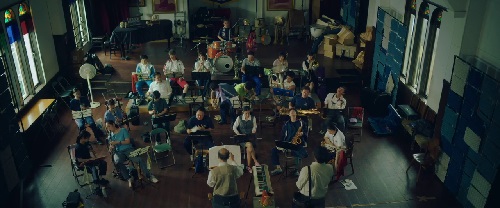
93) Offbeat Cops (Eiji Uchida)
Dirty Harry goes to the cops marching band. One of those enjoyable eccentric Japanese popular movies helped a lot by its reliable lead Hiroshi Abe.
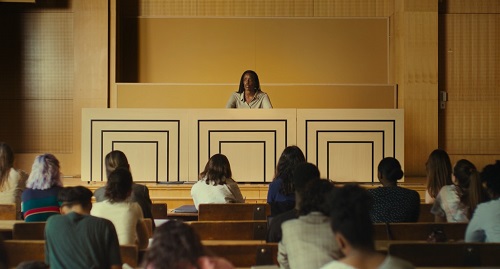
92) Saint Omer (Alice Diop)
The liturgy of power and how its absorbed by the film camera and those who go through it.

91) SINFON14 (Raúl Perrone)
Perrone is continuing his project for a completely handmade mythology of cinema. This one is very reminiscent of Albert Serra’s recent films, but Perrone is not interested in provocation, but in the elaboration of a private world.
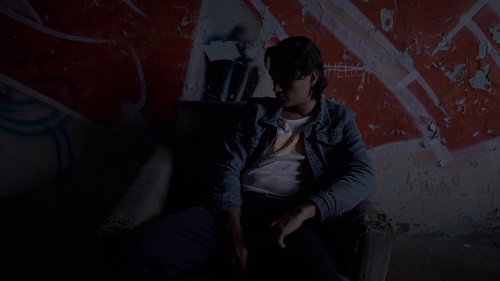
90) Anhell69 (Theo Montoya)
About every queer body that Latin American violence leaves behind and all the imaginations that are suffocated with them.
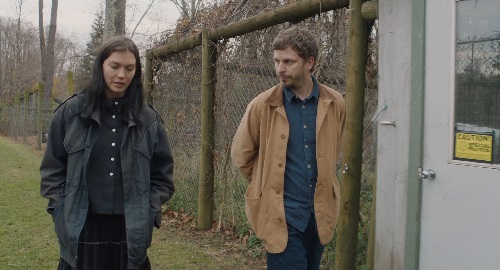
89) The Adults (Dustin Guy Defa)
American Hong Sang-soo, so it is all about how family bonds are terrifying and impossible to escape.
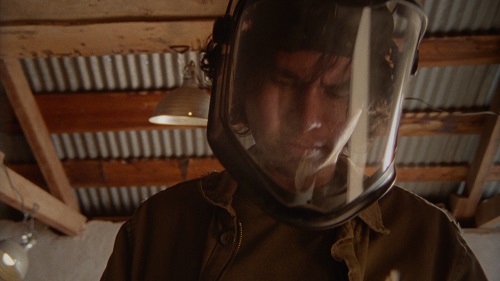
88) How to Blow Up a Pipeline (Daniel Goldhaber)
it is better as a genre piece than the political agitprop it wants to be, but it is so skilled at mapping and executing its revolutionary action I don’t mind it reach the limits of its functionality.

87) Espaço Liminar (Gabriel Papaléo)
Director Papaleo is a friend so feel free to take this with a grain of salt, but it is hard for me to resist anyone in Rio making an Albert Pyun-like experimental dystopia out of pure lo-fi imagination and some well deployed lighting. There is absolutely nothing like it in current Brazilian cinema.

86) Padre Pio (Abel Ferrara)
Ferrara and the consequences of history. From ideology one arrives at the body. A little limited by the low budget, but the highs are high.
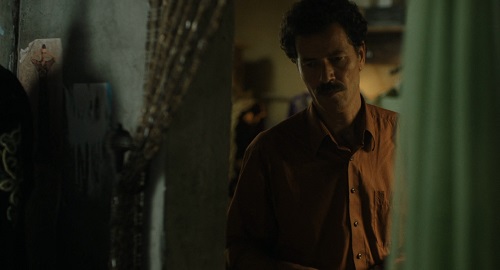
85) The Blue Caftan/Le Bleu du caftan (Maryam Touzani)
As far as bisexual love triangles about the multiple power struggles within, I much prefer The Blue Caftan to the flashier Passages. Director Touzani just has a wonderful eye for her trio of actors’ body language and she crafts a detailed world out of the studio that serves as the stage for their desires.
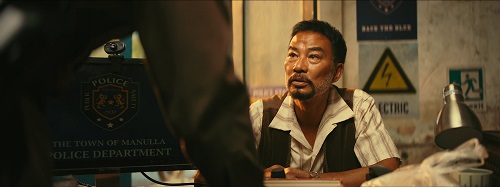
84) The Comeback (Chris Huo)
Every critic has their own biases and weaknesses, lots of dear friends love Alexander Payne’s The Holdovers, a movie that does quite a fair job at suggesting an American pean for loserdom of 1971, for my part I adored The Comeback a movie about Simon Yam as a geriatric Jason Bourne getting out of the cold that seems designed to make me think about late 90s Hong Kong movies I love. There’s lots of Hong Kong movies that want to suggest the glory days, but they are usually bloated and slow, The Comeback gets the senseless energy of those movies right even if its surface is very 2023.
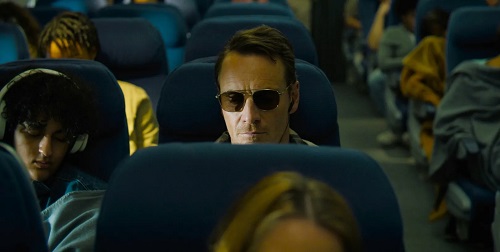
83) The Killer (David Fincher)
A very funny comedy about our own disposability in the form of a hitman movie. As corrupt as its overly contemporary world. It makes sense it’s the best Netflix original of the year.
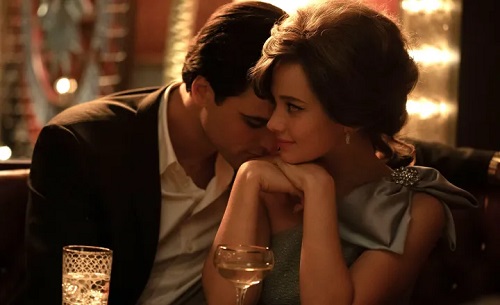
82) Priscilla (Sofia Coppola)
Speaking of contemporary auteurs with very recognizable signatures, Priscilla is the best Sofia Coppola movie since Somewhere by being also the most Sofia Coppola movie she ever made. It is about how a body loses its brightness through the erosion of an image by everyday cruelty and its use of Graceland as a private world that slowly poisons everything might be a better take on the Elvis myth than the movie that was actually about the guy.
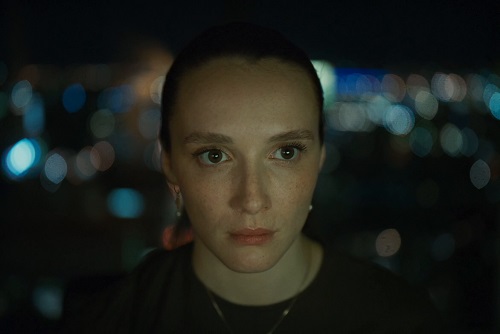
81) Red Rooms/Les chambres rouges (Pascal Plante)
A formalist non-thriller about all the ways evil is packaged and produces our fascination today.
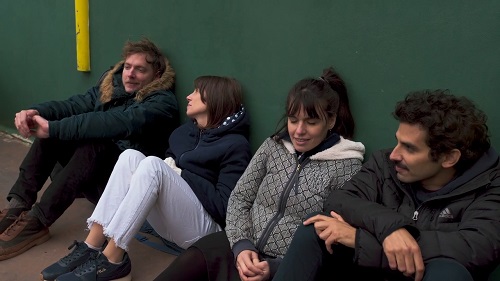
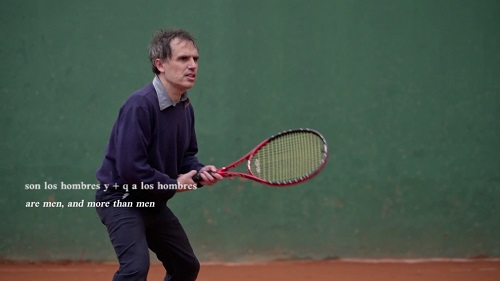
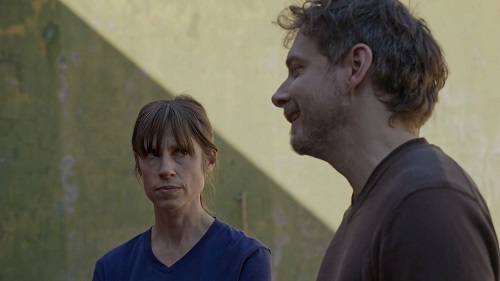
78) Smog en tu corazón, Saturdays Disorders and Weak Rangers (Lucía Seles)
One of this end of the year’s good discoveries are the films of Argentine filmmaker Lucia Seles. This is a trilogy released last year (she has since released a fourth addendum), about an absurd world in the throes of acute power relationships, somewhat reminiscent of Martin Rejtman’s movies, but with a violence that is all its own. It’s a great conspiracy between friends defined by the conflict between what the actors perform inside the frame and the authorial gaze the filmmaker keeps imposing on them.
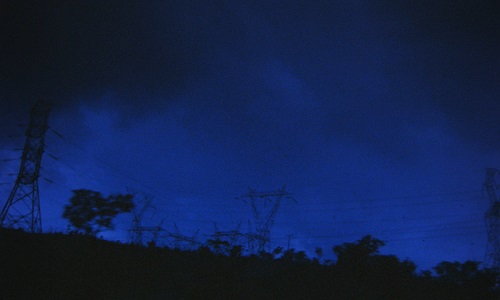
77) It’s Night in America/É Noite na América (Ana Vaz)
A flight from human civilization. A political act of imagination that tries to get close to animals and their eco-system and how they see and relate. Very refreshing and Vaz great eye makes the most of it.
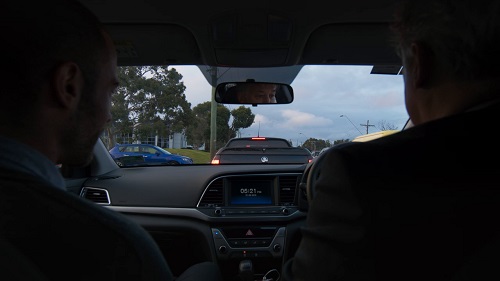
76) The Plains (David Easteal)
Another movie that does a great job of crafting a private world, this time the inside of an always moving car and its relationship and lack thereof with the outside. It is a little too pragmatical in that Anglo-Saxon way to be quite as fanciful as I would hope, but the three-hour trip is very worth it.
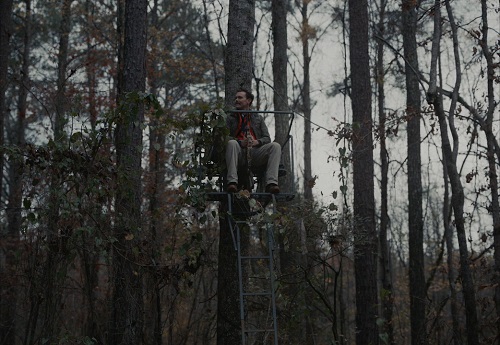
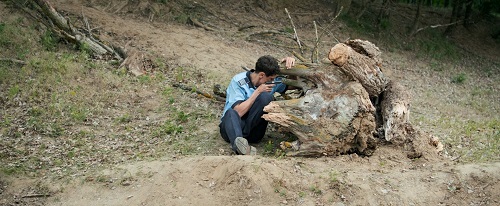
74) The Integrity of Joseph Chambers (Robert Machoian) and Men of Deeds (Paul Negoescu)
The old theme of the man against the world in that constant need to prove oneself. One through the prism of an exhaustive physicality and the other taking Romanian realism towards the paradox of absurdity.

73) Just the Two of Us/L’Amour et les Forêts (Valérie Donzelli)
French domestic abuse procedural that benefits from some great work by Virginie Efira and Melvil Poupaud and how good director Donzelii is at marrying the didactic escalation of her plot to the DePalmian excesses of its thriller images. A movie that believes fictions is the way towards its serious affairs.

72) Do Not Expect Too Much from the End of the World (Radu Jude)
A movie that nicely mirrors Fincher’s: another scathing comedy about our nightmare of precariousness, but in a more essayistic style. Similarly corrupt, but more aggressively in its diagnosis. If this world is on the verge of ending, at least we can perform the absurdity of its final days.
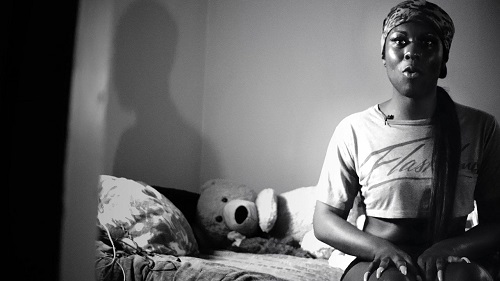
71) Kokomo City (D. Smith)
Four Black trans sex workers act for the camera and talk with a disarming frankness. Director Smith creates a very intimate space that her four protagonists weaponizes. A political movie, an impressive film portrait and a good riposte for well meaning representation.
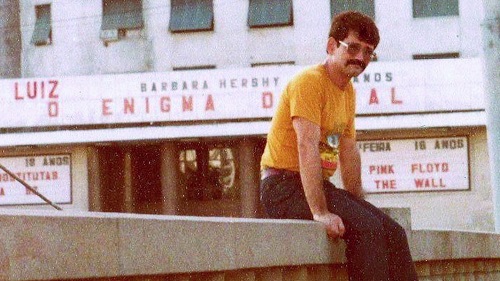
70) Pictures of Ghosts/Retratos Fantasmas (Kleber Mendonça Filho)
What remains of the city when we are conditioned to no longer dream it.
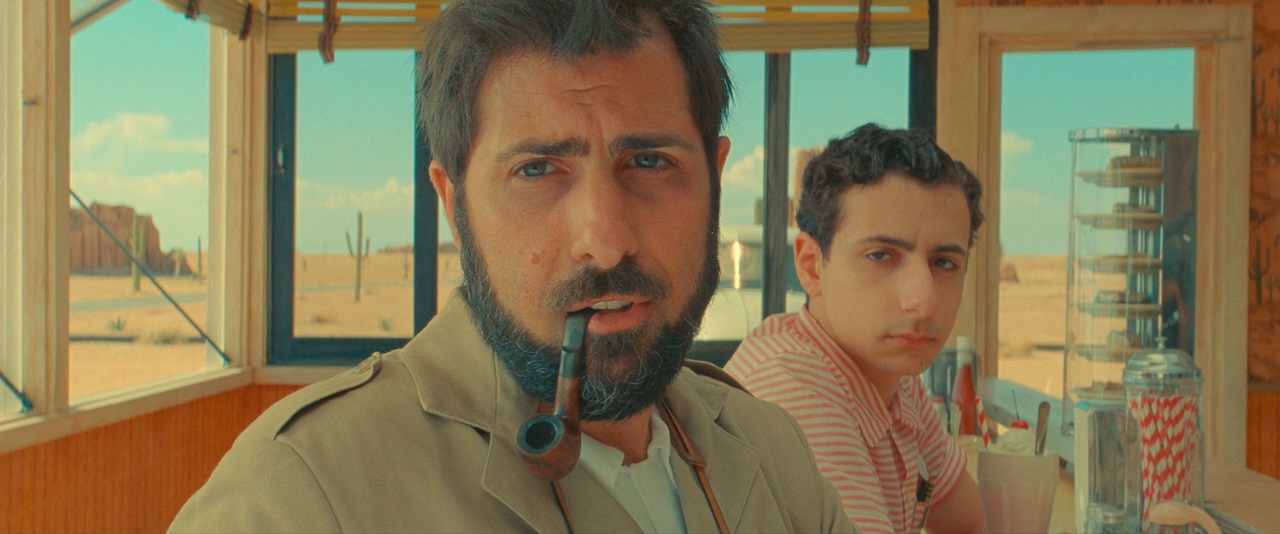
69) Asteroid City (Wes Anderson)
Art at the time of the bomb, a series of annotations based on a formalist luddism. Every moment between Jason Schwartzman and Scarlett Johansson is a treasure.
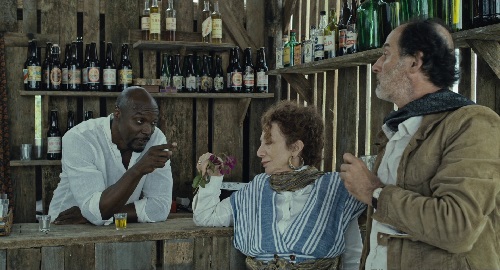
68) Endless Passions/Paixões Recorrentes (Ana Carolina)
The ways of presenting a conflict of discourses. Very exciting, even if it’s more in its manner than in its ideas.
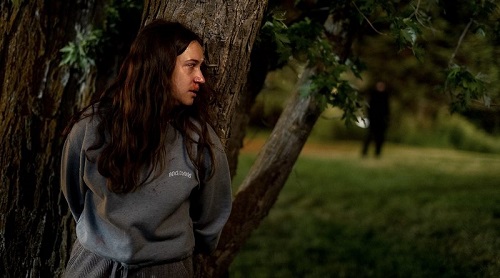
67) Sick (John Hyams)
John Hyams remains one of current genre cinema great formalists. A masterclass in using offscreen space.

66) De Humani Corporis Fabrica (Lucien Castaing-Taylor, Véréna Paravel)
A very violent movie about the human body and its presence on screen.
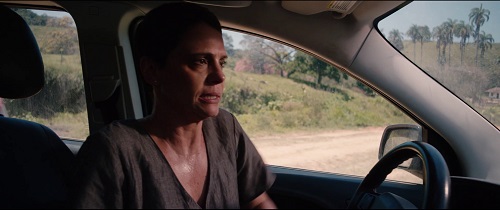
65) Property/Propriedade (Daniel Bandeira)
A very Brazilian malaise tensioned far above the usual limits of local cinema. it is a thrill ride without a pleasant thought on its mind.
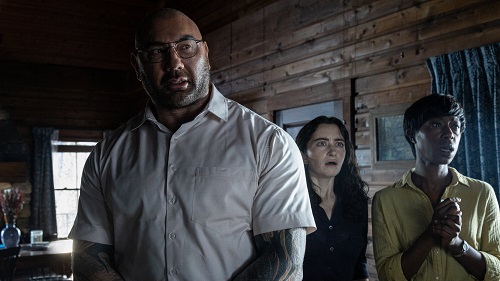
64) Knock at the Cabin (M. Night Shyamalan)
Can we expect much from the end of the world? Some of the most frontal filmmaking any mainstream movie will be able to conjure. Shyamalan is a religious filmmaker in the same sense Rossellini was, his is a cinema a revelation, otherworldly in ways that can feel upsetting. Dave Bautista gives such a naked and honest performance, so earnest yet so horrifying as the movie around him.
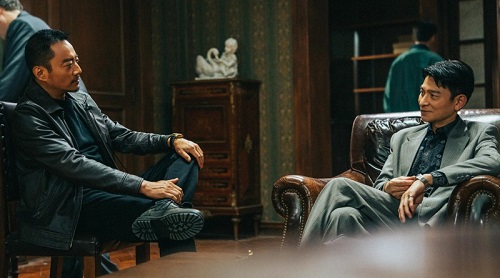
63) Moscow Mission (Herman Yau)
What strikes me most about these major productions that Herman Yau has helmed in recent years is that they deploy the best machinery of Chinese cinema, but exist from the vantage point of the weight and cost that these fireworks carry with them.

62) Jawan (Atlee)
Shah Rukh Khan narcissism as text and manner. A great marriage of maximalist filmmaking and star presence. A movie is doing something right when it is both exhausting by design and gets better as it goes along.

61) One Fine Morning/Un beau matin (Mia Hansen-Løve)
Like so many of Hansen-Løve’s films, One Fine Morning takes place in a very painful personal landscape that one must consistent negotiate, perhaps even more so than most of the others since it’s about a father’s death. It’s a movie about passing through the world, haunted by this reminder that we exist in a finite state.
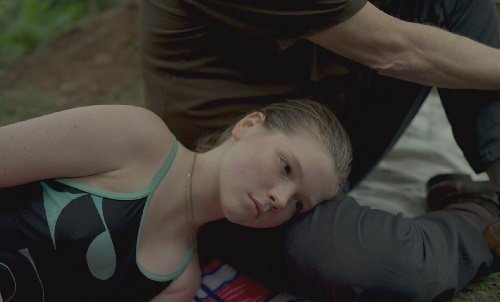
60) Music (Angela Schanelec)
About situating drama into the world. Film as musical theatre that moves from a sentiment to a very concrete existence of bodies and places that can barely contain it.
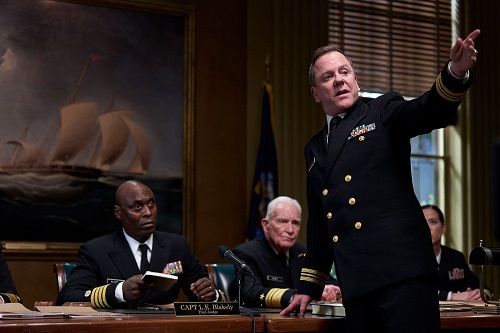
59) The Caine Mutiny Court-Martial (William Friedkin)
William Friedkin final movie is a precise balanced art povera all the more moving for being made for so little and his filmography closes with a final shot that is a perfect placed vomit towards its audience, I’m sure the man was pleased.

58) Walk Up (Hong Sang-soo)
Of the crafting of personal history from the engineering of the movies.
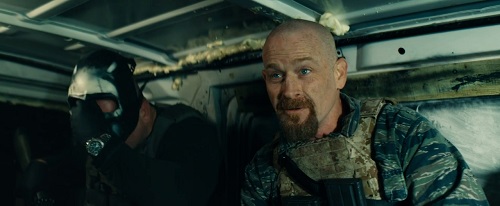
57) The Channel (William Kaufman)
A 50s B movie with post Mann influence and current DTV aesthetics. Just a very practical get the job done cinema with an understanding of its storytelling weight.
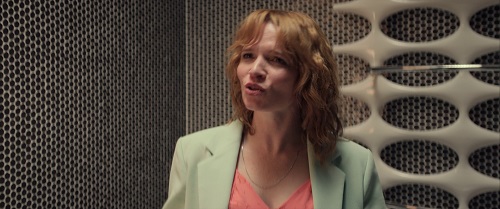
56) Just Something Nice (Karoline Herfurth)
A German Cameron Crowe movie that treats every one of its woman characters problems seriously and them imagines a fictional escape for them. Beyond the pleasant surfaces, a great eye for human behavior and foibles. Best romantic comedy of the year.
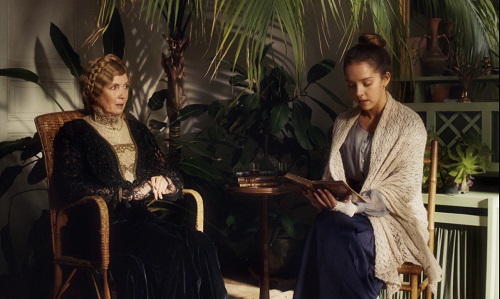
55) Secret Name/La Place d’une autre (Aurélia Georges)
The kind of thing French cinema does better than anyone else a defense of fiction and the strength of the fable. Terrific executed period melodrama, every frame and light. Ot even has Sabine Azema around for late Resnais vibes.
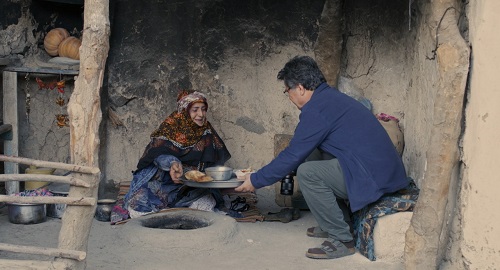
54) No Bears (Jafar Panahi)
The responsibility of cinema and the destructive powers it carries. It’s the Panahi movie that most resembles Kiarostami’s work the most since his earliest features, but with a disenchanted anger that is very much his own.

53) EO (Jerzy Skolimowski)
A death trip through the European Union and, in a way, through a formal history of modern European cinema by one of its masters. A formalist exercise about looking at a terrible world.
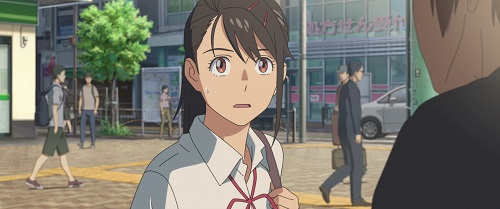
52) Suzume (Makoto Shinkai)
Wonderment from a painful world.
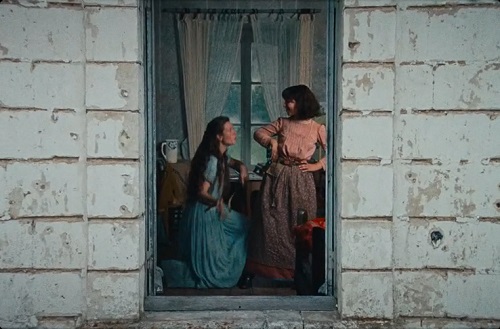
51) L’Envol (Pietro Marcello)
The distance between the textures of the film fable and the harshness of the tale.

50) Boston Johnny (Charles Roxburgh)
In a fair world, Matt Farley would be a celebrated multimedia artist and the film world would pay attention to what he, filmmaker Charles Roxburgh and their production company Motern Media are doing, but that they exist as an uncompromising foreign body in current American cinema is part of the fun, and as the films assert creative work will always be a pleasurable end in itself. Boston Johnny is silly, abrasive, very specific and the use of repetition is inspired.
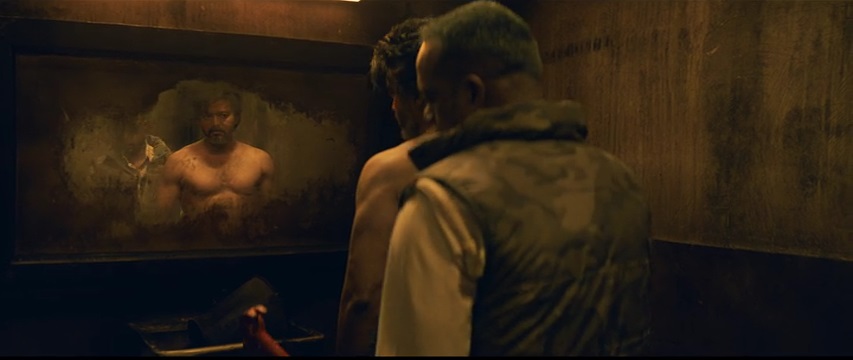
49) Leo (Lokesh Kanagaraj)
It’s a very interesting movie to ponder the differences between Indian and Western action films, since the starting point is the same comic book that inspired Cronenberg’s A History of Violence, but the experiences of the two movies couldn’t be further apart. Just think of the scene of the robbery of the main character’s café, which in the previous film is brief and stark. The moment he realizes that he can’t simply put his head down, but needs to take action, things end brutally and abruptly, while in this Lokesh Kanagaraj movie every moment of the decision and every element of the situation is expanded and distended, and when the violence comes, it follows the same logic, an idea of exploring every possible dramatic dimension of the scenario.
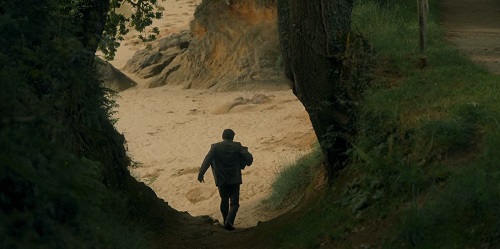
48) La grande magie (Noémie Lvovsky)
A delightfully eccentric and very personal musical about the emotional fallout of the intrusion of fantasy into everyday life, from the always reliable Noemie Lvovsky. Wonderful cast, great pastoral setting, the songs are hit-and-miss, but performed with lots of energy and obvious pleasure by all involved.

47) The White Storm 3: Heaven or Hell (Herman Yau)
Ghosts of Hong Kong old, departed action cinema.
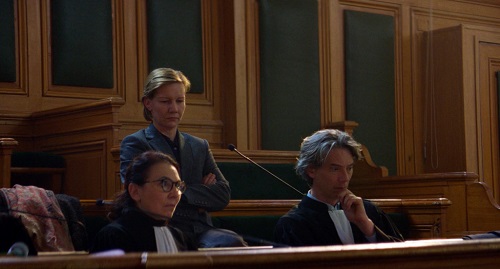
46) Anatomy of a Fall/Anatomie d’une chute (Justine Triet)
What does it say about me that the much-celebrated Golden Palm winner Anatomy of a Fall is my least favorite among Justine Triet four features to date? It is probably somewhere in between a me problem and world cinema problem, but regardless I’m very happy an artist I love is getting her moment. It is a very ingenious movie, sometimes too much so, but it is very good at exploring Its own fictional devices as well as how they inform the way private experiences are socialized through public fictions. One thing is certain in a great year about animals in film, that dog is a wonderful actor.
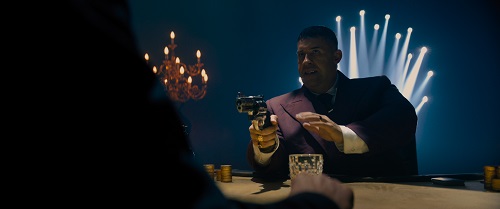
45) John Wick: Chapter 4 (Chad Stahelski)
Early this year it seemed everyone had a nice word about this one, but it hasn’t pop up much in end of the year discussions despite my friend Sergio Alpendre best efforts, I guess such is the disposable life of big budget movies nowadays and that is a shame because this is by far the best of those we got lately. For its bloat and overserious pulp origins it remains a great Keatonesque silent comedy and the entire Paris section is one great pratfall after the other. I certainly prefer Keanu’s masochism to Tom Cruise as punishing as this movie can be his sacrifice has no meaning beyond the incredible feats involved and whatever else it isa very graceful movie full of great often undervalued physical performers. Stahelski and Reeves desire to share the stage with them gives the movie an extra beauty.
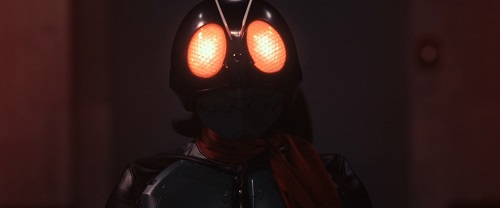
44) Shin Kamen Rider (Hideaki Anno)
This is the third in the series of Shin movies that Hideaki Anno has been working on over the last few years. The premise is quite up-to-date, giving a realistic treatment to various popular characters from the second half of 20th century Japanese fiction and fantasy, but what remains fascinating is how the results are always experimental and far removed from the stodginess of similar American attempts, because Anno’s great achievement is to when conceiving his characters as part of our world, to make both the wonder and the fear that they arouse more pronounced. He’ll probably never top Shin Godzilla, but I’ll take a new one of these every few years.
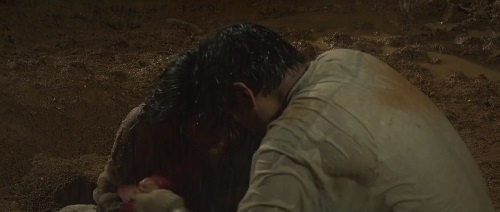
43) Mad Fate (Soi Cheang)
A religious tinged allegory for Hong Kong’s mental state that makes the best of Soi Cheang’s horror film training. The idea of fate hingers over the action and fate becomes a door to interrogate forms of control in a movie that is often on the verge of losing any. Fate mediates the city and the violence contained in it, but also filmmaking as a practice. Soi Cheang is the rare current filmmaker who thinks purely through images and the grisly very sad ones he arrives here have plenty of power.
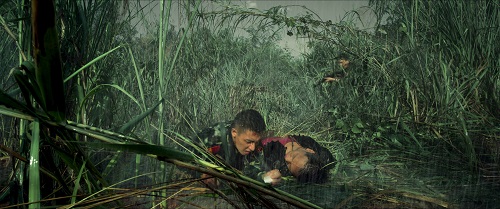
42) Raid on the Lethal Zone (Herman Yau)
When action cinema gives away to the disaster movie. The earth trembles and so does most of the logic of popular Chinese cinema. Pure environmental filmmaking, one can’t shot the landscape so what is left to the typical hyper competent Chinese hero to do?
41) Trenque Lauquen (Laura Citarella)
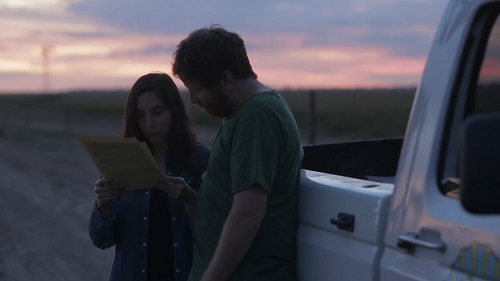
About getting lost on its own labyrinth of fictions, Those marathon El Pampero movies have always a certain exhaustive elements about their making, but this one is less about the filmmaking process than how characters consume their self imagined fictions. It creates this large story/place template and follows it until it reaches its natural end.

40) Queens of the Qing Dynasty (Ashley McKenzie)
Connection through the means of cinema.

39) Youth (Spring) (Wang Bing)
This movie is six minutes longer than Assassins and since by one of those accidents of fate it was screened in the Cannes competition it seems to have alienated even those who are ready to defend Scorsese’s running time (credit where it is due: Fremaux terrorizing Oscar bloggers by making them watch a Wang Bing movie is the coolest thing he did since putting Pedro Costa on competition 17 years ago). Wang Bing sort of operates against the usual logic of long movies, the 3h32 here is about those people and those places not how we experience them, they need this space and the Chinese filmmaker is going to open it up. It’s about young people working in the Chinese industry, not a good or bad portrait, but one that remains close to those faces, those gestures, those acts at work and at rest.
38) Dust To Dust (Jonathan Li)
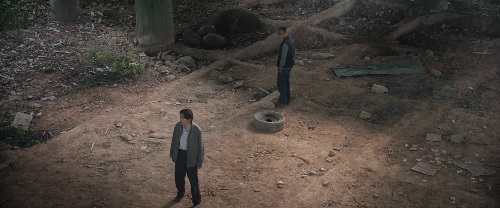
The nightmares of Chinese entrepreneurism and what they left behind. There’s a post-Mann heist and a few other action scenes, but it’s taken by desperatation and driven by director Li’s good eye for landscape. Da Peng is incredible both as a successful businessman, a criminal mastermind and a hard-working family man.
37) The Beast/La Bête (Bertrand Bonello)
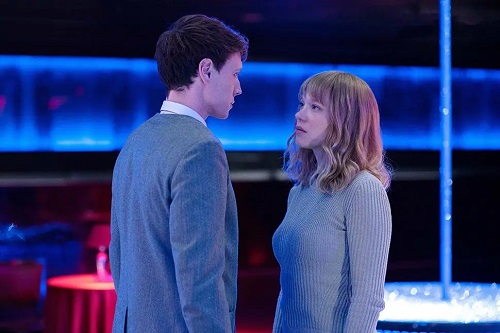
Contemporary anxiety through the lens of Lea Seidoux’s desperate DePalmian close-ups.
36) Essential Truths of the Lake (Lav Diaz)
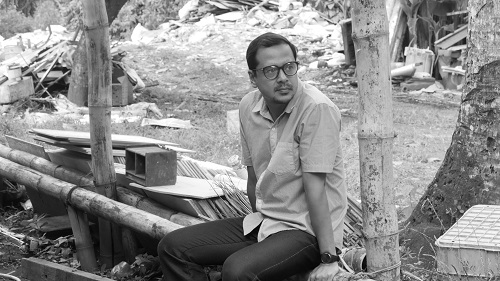
In a place of buried violent history, there isn’t many ways out of the ashes. A crime procedural to nowhere, but its own impossible to surmise task. It is a brief, by his standards, 215 minutes, but very heavy on existential dread.
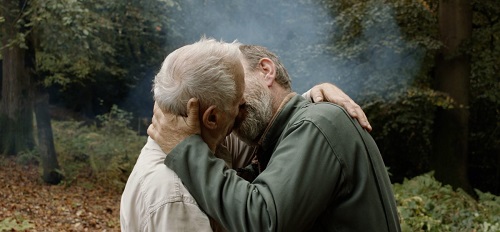
35) Un prince (Pierre Creton)
A lust for nature. Taking care of the garden and the attraction of bodies. A free movie.
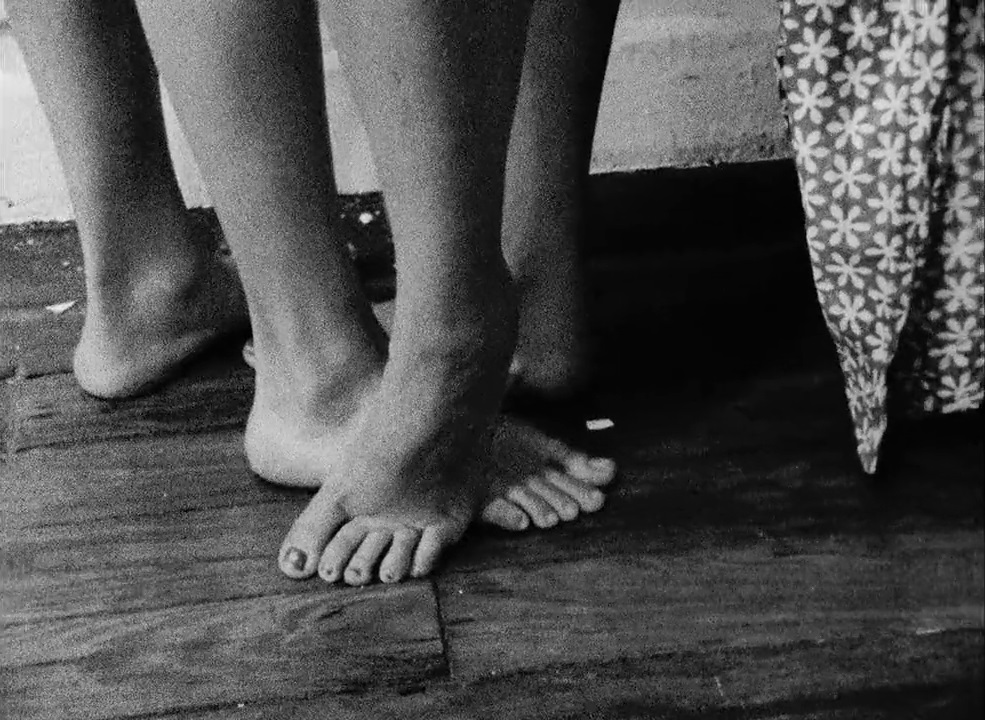
34) The Long Voyage of the Yellow Bus/A Longa Viagem do Ônibus Amarelo (Júlio Bressane, Rodrigo Lima)
The title is fair as this is a trip, but it is not cinema as autobiography as cinema as practice. The movies he made are what Bressane has left behind, so to them he must return to thinking about images past and future. This is a movie about Bressane as a major world explorer, but mostly about how cinema as an apparatus allowed this curiosity to take form. A true dialogue between Bressane and his long-time editor Rodrigo Lima about what this voyage can mean.

33) The Sweet East (Sean Price Williams)
An aggressive current USA picaresque with the body of some long forgotten sleazy 70s European genre movie that a boutique label will soon discover. I have a great time just watching how the movie could find new spins and let Talia Ryder adapt herself to it.
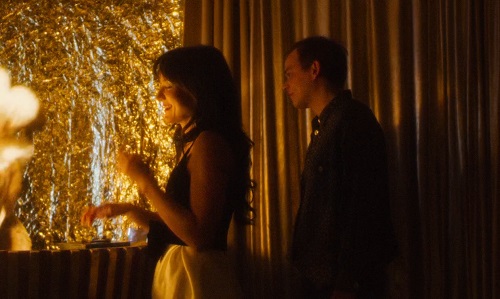
32) The Beast in the Jungle/La bête dans la jungle (Patric Chiha)
Unlikely synchronies: two French adaptations of the same Henry James novel, both contemporary set and with an ambition to use it for a broader commentary. I think I like this Chiha movie a little better because the cinematography is by Celine Bozon, it’s also a movie about light and she’s one of the world’s greatest artists.

31) Allensworth (James Benning)
Pictures of a ghost town. An immersive experience into the idea of a early 20th century Black small town, on what history and the film image can register.
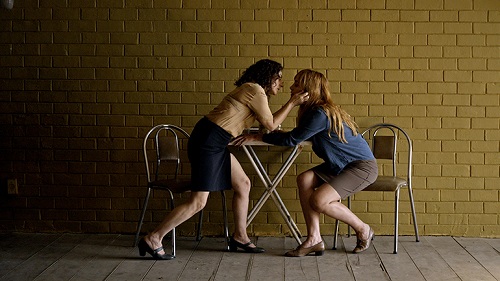
30) Leme do Destino (Júlio Bressane)
It’s always incredible when Bressane sets out to shoot the intoxications of desire because he’s one of our most carnal filmmakers and the characters’ gaze is transmuted in every detail on screen.
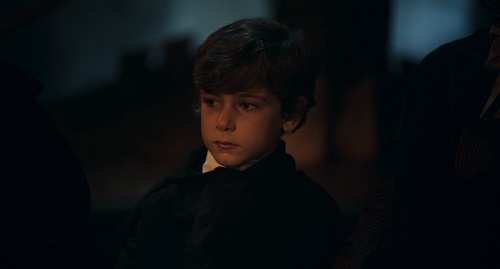
29) Kidnapped/Rapito (Marco Bellocchio)
Bellocchio exhuming another sin of the church, and by extension, of Italian society as whole. A brutal melodrama with few mediations.
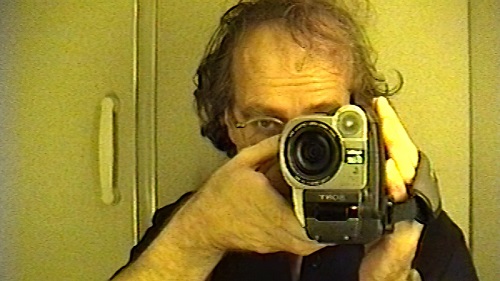
28) The Last Days of Humanity/Gli ultimi giorni dell’umanità (Alessandro Gagliardo, Enrico Ghezzi)
20th century film, and cinephilia, as a great archive that reaches out to the world and the attempt to organize it, to ponder what it has seen and what we can take away from it. The twilight of an idea of cinema that is slowly disappearing.
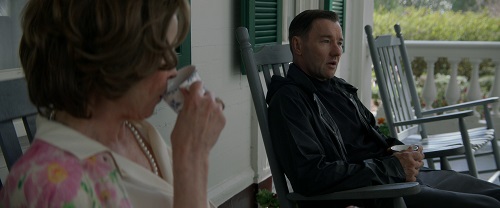
27) Master Gardener (Paul Schrader)
A movie about how a violent history survives in the body and places, but by Schrader standards, surprisingly hopeful. Film as an act of imagination, Schrader describes it as a fable, a healing fantasy presented as an act of cinema’s sleight of hand, not authentic, but deeply felt. It is very questionable, but I doubt Schrader has lost any sleep over it, his freedom is what makes his later day work, good and bad, so exciting.

26) Bowling Saturne (Patricia Mazuy)
This has my favorite throwaway shot of any new movie I’ve seen this year: a cop getting a dead woman’s hand to open her phone, the mundane naturalized violence of it all so impactful. The movie itself is the opposite of mundane, brutally engrossing and thoroughly aestheticized take on how violence movies from family to place. It suggests Mazuy’s wonderful debut Peaux de vaches (1989) from a world even more poisoned and impossible to escape.

25) Return to Seoul/Retour à Séoul (Davy Chou)
History of an irreconcilable fracture.
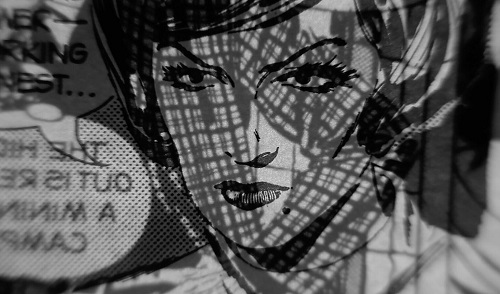
24) The Blue Rose of Forgetfulness (Lewis Klahr)
Another collection of Lewis Klahr shorts that feel like a tight conceptual album, six movements around dreamed fictions that look towards a compendium of old Hollywood imagery while reconfiguring them in a way that makes their romantic longing unique under current context.
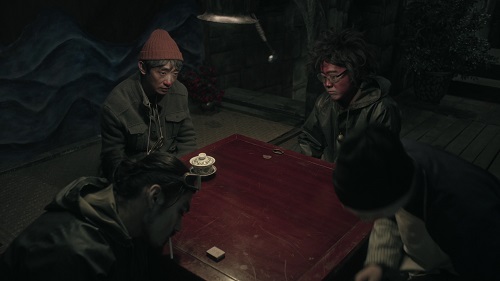
23) A New Old Play (Qiu Jiongjiong)
Theatre, history and representation. In some ways this plays like a throwback to 1990s Chinese movies that start with the question how can you take all of this history into account in fictional film terms? But it is far more inventive, acid and all-encompassing in its embrace of duality of fiction/history than those usually were.
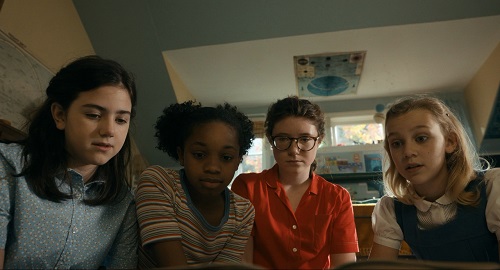
22) Are You There God? It’s Me, Margaret. (Kelly Fremon Craig)
Craig has a very good ability to modulate the proceedings and shift from bittersweet to anxious. It’s a beautiful movie about pre-adolescence, just as her previous The Edge of Seventeen was about teenagers, above all because it’s very good at finding the right distance for the gaze of her main character.
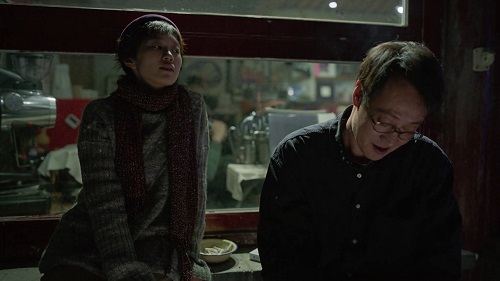
21) The Shadowless Tower (Zhang Lu)
The shadows of history are everywhere, at every place and at every face and one is running into a mirror of it.

20) The United States of America (James Benning)
American fictions or the United States as a James Benning movie.
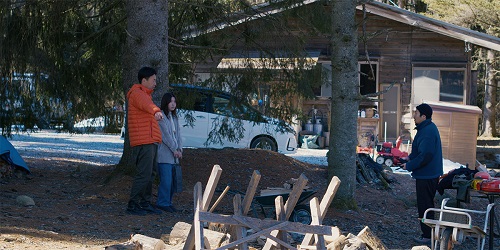
19) Evil Does Not Exist (Ryusuke Hamaguchi)
A funny harrowing western about the absurd of the idea of progress. Above all an environmental achievement in tracking the land in dispute in all its beauty and danger.
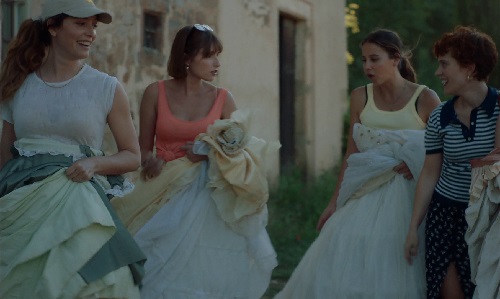
18) The Girls are Alright/Las chicas están bien (Itsaso Arana)
The fictions that we find in a summer. It’s a movie based on a play rehearsal and it’s about the pleasure of those womens’ encounter with the text and with each other. Arana’s own satisfaction with her movie and how it is shared with her other four actresses is very palpable.
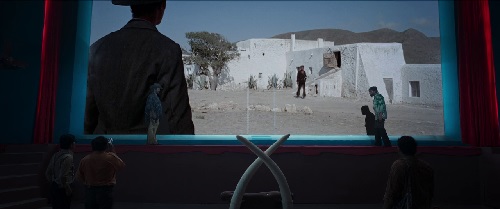
17) Jigarthanda DoubleX (Karthik Subbaraj)
Sturdy, delirious images based on other sturdy, delirious images. Their expressive force, but also what they carry of a violent and destabilizing nature. To light a candle in the church of Clint.
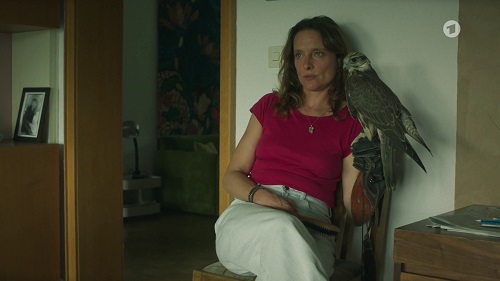
16) My Falcon (Dominik Graf)
A woman shares a room with a falcon, with her a lot of painful personal history and even more future uncertainty, but in the moment there’s her and the animal and this moment together. Only a gifted storyteller so in love with the pleasures of narrative could ended up with something like this whose strengths could only belong to the movies.

15) In Water (Hong Sang-soo)
Or as it will be forever known Hong Sang-soo out of focus movie (I guess that is a way to make sure you make your mark in the current market), I understand why this is a step too far to some, but in a way it highlights how few can quite imagine a fiction with Hong’s precision even when it seems nothing much is happening, the way everything falls into place and the film just hits you in the final moments is a delight.

14) May December (Todd Haynes)
There are lot of representational mirrors, each sharing a lot of violence. Like every Haynes movie it is an investigation on what those modes of representation carry, and it is very bleak at what it finds. Call it the anti “the magic of movies”. Every pain is fodder for one form of drama or another, be it the respectable auteur Persona riff or content glut.

13) Ferrari (Michael Mann)
Ferrari is in many ways a very similar movie to Oppenheimer: two great man biopics very interested in the carnage they left behind and clear eyed about how its linked to mid 20th century capital death drive, yet they are in awe with their man and Mann and Nolan obvious love and identify deeply with them. Ferrari does implicate cinema and art in a more direct way, it is a movie about one form of spectacle after all, and it understands how everything from sports to the arts often operates towards mystifying and making acceptable a lot of the cruel engines of society. The two main threads here, how a form of “artisan” commerce drops its facade just enough and how the personal heritage is just one other aspect of it are waved together so it is a how movie about the ways one crafts those images of respectability. When later in the movie the inevitable big accident comes, it is rendered with enough unreality to add an extra veil of movie-like horror and then the movie keeps going because what’s a few more dead bodies beyond a nuisance. It is a long dream project, so long indeed screenwriter Troy Kennedy Martin has been dead for 14 years and Mann has an executive producer credit on Ford vs Ferrari because at some point that movie was this one and while this is technically the best Hollywood movie of the year, it was only finally possible due to one of those complicated international co production deals that exist far outside it (there are 35 names listed as producers/executive producers). Some great work by cinematographer Erik Messerschmidt and even more so by Penelope Cruz. Plus, for Brazilians there’s a plum role for Gabriel Leone.

12) A Brighter Tomorrow/Il sol dell’avvenire (Nanni Moretti)
An old left curmudgeon tackles what kind of film utopia it is even possible for him to imagine from a bare present. Of course, this was already a perfect way to describe a lot of Moretti angry young man movies; the bitterness just got replaced by a mix of sentiment and nostalgic disappointment. Most of the movies that Moretti made after his 1990s diary films exist in the tension between his revolt and the happy middle-aged life of a very successful filmmaker, and in some ways, A Brighter Tomorrow brings this tension forward to the text itself. I’m unsure if it makes much sense if one does not have a good amount of investment in Moretti’s filmmaking, which it constantly revisits in one matter or another, and it certainly has a lot more to do with struggling with the past, but watching Moretti unload and his desire to reach some images can be very moving and expressive, some of the best “old master still got it” filmmaking of the year.
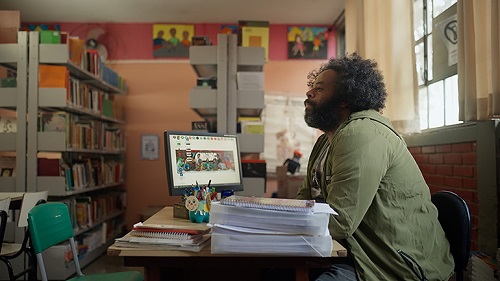
11) O Dia que te Conheci (Andre Novais Oliveira)
A lovely funny romance about two people bonding over being the only Blacks on their shitty job and their antidepressant medication. It is made almost entirely out of offhand moments taking place over a day, of small gestures that slowly generate a large wave of emotion. The casualness of the filmmaking comes together with how they bond with each other. Novais usual great ear for dialogue is in top form, and his leads, his brother Renato and Grace Passo, are superb. The year second best proletarian romance.
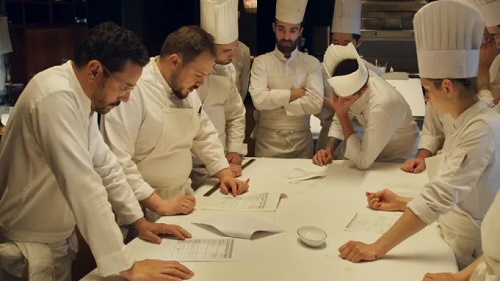
10) Menus Plaisirs – Les Troisgros (Frederick Wiseman)
Fine cuisine as one the last vestiges of handcrafted art. A movie that exists between the observation of first-rate artisan labor, the entire structure around it and the privilege necessary to consume and sustain it.
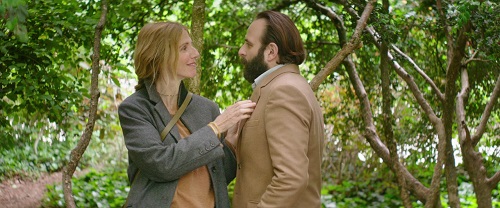
9) Diary of a Fleeting Affair/Chronique d’une liaison passagère (Emmanuel Mouret)
Some of the most meaningful things in life happen in between. It is a movie predicted in what we are allowed to see, these two people are having an illicit affair, the moments we get to see are generally very good and at the same time the movie is hyper focused on them and very self-aware of what’s offscreen, that there’s other lives this two people live that Mouret isn’t following around but who still exist over them. The movie operates towards reducing everything and let its miniature play against an idea of a larger world. The same way it understands its notions of romantic longing in ways that are embarrassing awkward and very sincere at all times. Mouret careful considered formalism remains top notch, there’s no shot one can question and when he shifts from the casual to an emotional rupture is impossible to avoid been moved.

8) The Temple Woods Gang/Le gang des bois du temple (Rabah Ameur-Zaïmeche)
A heist movie about existing on the margins of European society, about the everyday weight of all kinds of violent power struggles. A materialist nightmare with a great sense of place and a very specific gaze that at the same time recognizes its allegorical weight. Ameur-Zaïmeche films everything in a realistic impressionism mode close to a Pialat, but the meanings are all his own.
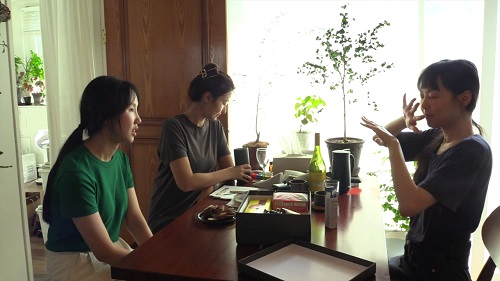
7) In Our Day (Hong Sang-soo)
The world would be a better place if we could experience it the way a cat does.
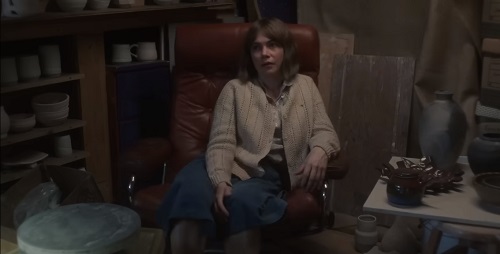
6) Showing Up (Kelly Reichardt)
One of the best movies about creative labor and the compromises involved in sustain it that I remember seen because everything about Reichardt and Williams approach is so focused in concrete gestures.

5) Bonjour la langue (Paul Vecchiali)
Paul Vecchiali died at the age of 92 last January. He made this last feature film in a hurry, prompted by the death of Jean-Luc Godard, 91, four months earlier. It’s a movie about stopping time for one last moment, about what cinema can hold and also about the permanence of each person and strengthening relationships while this is still possible. It’s a beautiful and affectionate movie, also because it’s so honest about how the recriminations of history are not easily erased. And there’s Vecchiali himself on screen, always sitting, complaining about the breathing problems of the long Covid, dreaming about the last movies of his beloved masters and remembering that his days are getting longer because his friends are passing away more and more. Vecchiali was one of the great melodramists of cinema and I think it’s only fair that I cried so much at his last breath,
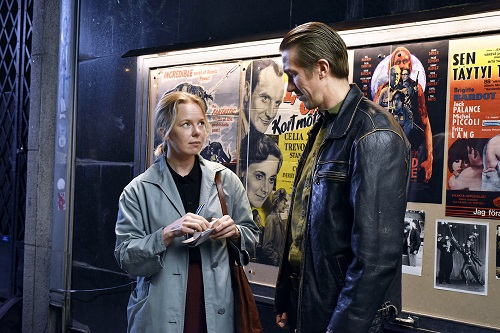
4) Fallen Leaves (Aki Kaurismaki)
An exchange of glances establishes that two people are in love, but the world will conspire in the widest variety of cosmic and practical ways to keep them apart until the benign hand of the auteur brings them together in the final scene. Until then there’s a selection of wonderful faces, the two best cinephile jokes in a long time, karaoke, lots of booze and an adorable dog named Chaplin. Kaurismaki doesn’t change a note of his usual minimalism, this is an addendum decades later of his proletarian love trilogy, but it’s perhaps his most accessible movie, everything generous and benign that his movies offer reinforced without losing the underlying melancholy: the world around us may still be miserable, but cinema can make it fair for 80 minutes.

3) Afire (Christian Petzold)
About a world coming to an end. It’s so casual, a vacation comedy about a very recognizable annoying artist who goes to the beach to make himself a little more miserable by watching others, that when the fire promised by the international title (the German original Red Sky also applies) turns out to be factual, it’s a shock, even though the movie is precisely structured and inevitable. But then, the whole movie exists in this exact movement between Leon’s narcissism and the violence of the world around him. It’s a moving film because it exists in this constant understanding of the frailty of things in the most diverse environments.

2) The Kegelstatt Trio/O Trio em mi bemol (Rita Azevedo Gomes)
There has been a lot of comparison between Afire and a Rohmer movie, which is fair but this latest film by Rita Azevedo Gomes is based on an actual play by Rohmer, but it’s nothing like him. It’s about a series of encounters between a couple of ex-lovers and the movie that is made from them, about the feelings generated by this encounter and about the labor and adventure of discovery to reach it with Rohmer’s text treated like a music sheet that Gomesand her collaborators explored toward finding new things. There’s a moment when the couple (wonderfully played by Rita Durão and Pierre Leon) argue and Gomes’ camera deliberately moves away from them until it finds a piano that is one of the most beautiful things I’ve seen in any movie in recent times.
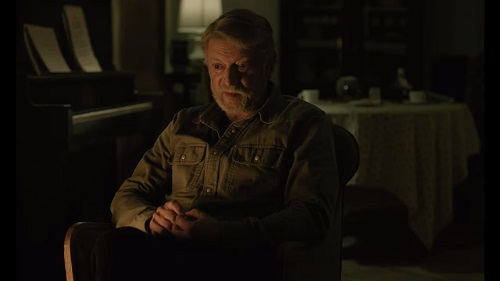
1) Close Your Eyes/Cerrar los ojos (Victor Erice)
Victor Erice first feature film In three decades and very much a movie about time and how it relates to movies. Old age and memory and also how film functions so it allows things to remain while chronicle their disappearance. It exists in a suspended present, but it is surprisingly warm and funny, it is the hunt for the past that remains always troubling. Those sequences when we follow our interrupted filmmaker in his life of exile are essential because it is a fulfilling one he has a wonderful dog, a daily routine he enjoys and is surrounded by lots of people he loves and he even get to play Rio Bravo’s “My Rifle, My Pony and Me”, one wishes to get to to old age like this, but yet the lure and the pain of memory remain and only the shock of movies, the Dreyrian miracle might serve to snap something out of it. And there’s the mystery of Ana Torrent’s face, the one film reference that matters as a film reference, so memorable as a child in Erice’s The Spirit of the Beehive 50 years ago and still there also contemplating something trying to understand this same interval. Close Your Eyes is a very wise, very touching movie that covers a lot in its 169 minutes, does it make the same effect if you haven’t spent a lifetime contemplating and pondering about movies the way Victor Erice has? I sincerely do not know, but I know it moves and shakes me deeply. As times passes it becomes clear to me that after the success of James Cameron’s Avatar led to a replacement of the entire distribution system from print to digital, we enter a new period of film in some ways as significant as the talkies, that for the past dozen years or so we’ve been in new film period we haven’t fully grasped yet and I don’t think Close My Eyes is the best movie of the year as much as the best movie of this archive era, among other things because it refers to everything that come before but could only be made now.
 Anotacões de um Cinéfilo
Pingback: Meus Filmes Favoritos de 2023 | Anotacões de um Cinéfilo