
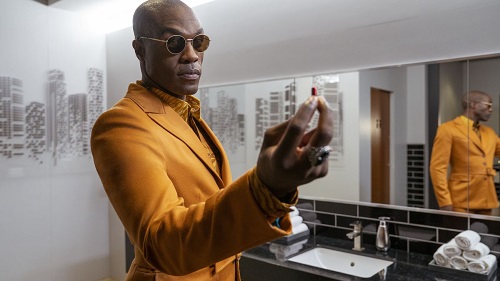
Any late revisit towards a famous movie will always be haunted as much by the weight of old images as by the distrust that it is all a cynical creative gesture. A return loaded by past meanings and a desire to exploit these images in the present day. This goes equally to something like 2010 (1984) or Blade Runner 2049 (2018), not to mention thousands of remakes of varied quality the film industry always produced. It is not a recent phenomenon, Hollywood has produced images on echoes since its early days. Charles Chaplin played the Tramp in one form or another for nearly three decades until The Great Dictator (1940), and audiences never fully pardon him for the symbolic abandonment of the character by its climax. Of course, such saturation has reached a new extension these past few years, movies that often exist as promises of future movies and echoes of movies past have become not only the dominant form but the only business available in big-budget cinema. A few months ago, Warner Brothers released Space Jam 2, another belated sequel that doubled as an exercise in nostalgia for the old movie and a conscious ride through the studio’s library. The new Matrix Resurrections, made 22 years after the original movie and nearly two decades after its event sequels, is a film imagined from the creative anguish derived from these observations.
Is there a real motive for Lana Wachowski (working here without her sister Lilly) to revisit her most famous movie 22 years later? In practical terms, one must say the answer would be a no. Matrix Resurrections is a movie that exists because a major media conglomerate, the same Warner Brothers, decided that among its old archive this was something ready to be repackaged, and because one of its creators, in a moment in which it has become increasingly harder to get financing, deemed it was worth a try to give it another go. That doesn’t mean it is a bad movie; I happen to like it a lot, but that is the reality that made it happen, and the first and, in some ways, most essential creative decision is assuming this starting point. There’s a moment in which Neo (Keanu Reeves), again inside the Matrix—because a certain reset is essential for this repeat culture—and in its new reality is a videogame designer responsible for the famous trilogy known as Matrix, is informed by his business partner that their parent company, Warner Brothers, plans a new sequel for the game and that it will happen with or without its creator. It is a very funny scene, as is the later one where a bunch of creative types go through the appeal of the original movie in manners that keep reducing it to buzzwords read to be exploited commercially.
Some saw this movement as passive-aggressive defeatism, there’s nothing left besides trying to manage one’s own creation and trying to limit corporate damage. This seems to me a more literal than symbolic reading of the possibilities set in motion. To turn the original Matrix movies into part of the new movie’s text and extend that to its means of production are essential to imagining Matrix as creative and not just a cynical gesture in 2021. If there’s anything defeatist, it’s the movie’s consciousness that, from the point of view of the entertainment industry, the machines long win and that the original movies are part of such a process.
The original Matrix is, of course, one of the turn-of-the-millennium movies most imprinted on collective consciousness, an aesthetic and series of images that become saturated through the next few years, even if someone happens to have never seen the movie and might not be able to pinpoint its plot but would probably manage to recognize a lot of its procedures, from visual style to Hong Kong cinema-influenced action scenes to a lot of the terminology the movie deploys. It is the rare major popular success whose existence seems to extend far beyond its studio’s profit, the movie’s existence remained on home video, on television, and in infinite parodies of Keanu Reeves wearing dark glasses and a black coat. Matrix Resurrections arrives from what is made of such imagination.
There are two recurring linked ideas that the movie returns to multiple times. One is that the original trilogy is something very personal and sentimental for Neo, who lived through it, and Lana Wachowski, who created it. What can be made out of mass-produced personal art is what is at stake here. Resurrections is a very generous movie in this way; its anguish is more towards how images are commodified than necessarily misread. The movie still operates through contradictory impulses, and if Wachowski can often be a didactic artist, she isn’t one who feels the need to impose meaning over things. The main tragedy of the original Matrix is what the industry, not audiences, made out of it. In the already mentioned scene, the original trilogy dissected everything from “trans politics” to “bullet time”and endeds up sounding the same as a hollow advertisement ready effect. There are feelings and ideas there that are turned into things to be exploited.
The movie operates towards affirming how those images have their own meaning, that they resonate beyond how they are sold. One of the strongest and most touching ideas in the film concerns how those images are inhabited. Two of the more famous characters in the original trilogy, played by Laurence Fishburne and Hugo Weaving, are reimagined by new actors, Yahya Abdul-Mateen II and Jonathan Groff. Those are very self-conscious performances, deliberate echoes and misreads of the originals. They are not playing characters that are written but characters who were already given flesh by previous performers. The actors’ pleasure is made clear throughout the movie. Old identities are given new bodies and locate new meanings. The original Matrix was not updated but lived again through new meanings, the new actors finding in iconic figures fixed on the imaginary a new gestural reality, and in each procedure and obsession that is not just more of the same. To be and to create are continuous movements, and some of the movie’s strength is in how much it believes in this idea.
The other idea that it keeps returning to is how nostalgia is a form of control. The new Matrix doesn’t just bring inside the text its own existence but also the idea that its new existence is based on a desire to keep it fixed in time. One doesn’t want a new Matrix but the same, a Matrix that sounds new but retreads the original (something like The Force Awakens). The movie’s new villain, played by Neil Patrick Harris, makes multiple speeches about the comforting importance of nostalgia. Lambert Wilson, one of the few actors brought back, shows up just to reinforce the appeal of the past, a nostalgia figure discoursing on nostalgia. Everything was better in the original Matrix. The film industry’s desire to keep remixing the past is imagined as something sinister. The new Matrix is moved by two ideas: that things are consistently getting worse because it keeps the world more engaged and that there’s something comforting in this constant return. It doesn’t take much to imagine this new Matrix as an allegory for social media as it exists today and how this obsession of a past reimagined as present is vital for it to work.
The original movie is often described as dystopian fiction, and the overall idea of humanity turned into batteries for machines reinforces this vision, but it is also important to say that the first Matrix was a movie that belongs to the first period of popularization of the internet and the possibilities inherent to it. Matrix was a movie that started from a terrible place but that imagined escapes for the same and saw online communities as a key part of this process. Morpheus spaceship was made of an anarchist group that kidnapped the meanings of the web; identity was something fluid (there’s a long, rich tradition of reading the movie as an allegory on transsexuality), the villain was a law agent whose main objective was keeping the world’s binary order clear, and the chain of zeros and ones needed to be respected. The Matrix’s diffused reality was something that could be changed, a space in dispute ready to be taken by radical ideas.
If the first movie was the work of two filmmakers given a first opportunity to realize a vision with full industry backing and the new one is the work of someone who, through those two decades, has won and lost enough to look at all of this process with more distance, the new Matrix also arrives in a moment in which the idea of the internet as a society of control won, and it moves towards poking holes in it. A movie that is less a utopia affirmation than a gesture of subversion and smuggling.
One of the more radical ideas the movie plays with is exactly this approximation between Hollywood machinery and society of control. The movie’s first act, which is its most playful and engaging, is a series of frustrated attempts by Neo to separate himself from the Matrix in a world in which everything moves towards affirming that reality, including even the creative imagination that works as a form of escape and control. Even his love for Trinity (Carrie Anne Moss) is weaponized to keep the status quo, with both visiting the same coffee shop and her image so close to the character in his game/dreams helping keep the idea going. To give enough of the old with the appearance of new so things keep the same is something the movie keeps returning to. There’s no more need for law enforcement figures like Agent Smith to execute this task, cops are not very popular in Hollywood movies anymore, after all. Reinforcing forms of desire cover this cop-like task very well, and cinema and popular culture are always there to help disseminate it. One of the movie’s best jokes is casting Chad Stahelski, now better known as the director of the John Wick movies also starring Reeves, as Trinity’s husband inside this reality. Stahelski was also Keanu Reeves’ main stunt double through the 90s/00s, so it is him on screen in many of the most famous action moments of the original movie. Trinity is married to the Hollywood illusion of Neo.
If the original movies played with the idea of discovering a new reality behind an artificial construct, the new one imagines the Matrix matter in more therapeutic terms. It is no accident that the new Matrix runner is a psychiatrist and that the blue and red pill idea is resignified as antidepressants, it is not that Resurrections is some sort of anti-therapy movie, but one that locates contemporary malaise as an essential key to managing the capital machinery, less Baudrillard and more Mark Fisher. The society of control is thought of in law-and-order terms when it affects fears but exists as a series of other neuroses and frustrated desires that are also essential to sustain this ill society and the security and recognition of things, and on the terms that matter more to this movie, of artistic creation, are essential to this process. It is worth pointing out also the recurring references to suicide. The old Matrix was a simulation thought towards satisfying its users, the new Matrix exists in a constant movement between depression and consumerism, a society that is more functional the sicker it is. Hollywood’s role is guaranteeing its sameness; the images of the new Matrix, like the images of most big-budget movies, suggest this mirror is constantly updated and always ready to serve a consumer-spectator.
Most of the first fifty minutes of Matrix Resurrections suggest a comedy whose narrative keeps getting bugged, a series of repetitions and interruptions that need to, but do not always, go back on point. The opening scene is a wrong reproduction of the original opener, some of the movie motifs return, but always with a certain strangeness, the idea of the original trilogy as something stuck in the past that needs to be returned to multiple times through a series of new gazes. The crew of the new ship that replaces the original one is made of youngsters for whom Neo is something mythological (and in a movement that doubles the game of mirrors, is made of actors who Wachowski worked with in her series Sense8). The idea that one needs to return to original images is repeated and parodied multiple times. The movie returns many times to the expedient of the original movie as an echo, be it through flashes or reproduced on surfaces, the main meeting between Neo and the new Morpheus takes place in a theater while the images of the early meeting are reproduced on screen. It is not a matter of wearing down images, but of its opposite, it is a movie that wants to give new life to them. What matters in this contrast are differences and not similarities.
A little like Cry Macho, Matrix Resurrections is a movie that is proposed for fans, but the fan in question is not of the corporate franchise Matrix, for whom the movies exist as a series of procedurals eternalized in time, but of Lana Wachowski as an artist. Those are movies that reinforce the idea of the auteur not as some sort of genius whose collaborators don’t matter (Wachowskian utopia is always predicted collectively), but as a proper point of view taken by idiosyncrasies. If the machine operates towards erasing the artist and his contributions in favor of mercantile ideals, these films move towards reinforcing that a lot of what makes them something interesting to engage with is what they have of particular, awry, and sometimes off-key. The movie keeps returning to how Matrix belongs or does not belong to her, a work that exists in the world, but whose signature is impossible to miss. One can make a lot with it, including asking for the minimum, but it remains more a movie by Lana Wachowski than Warner Brothers.
Matrix Resurrections exists in a constant negotiation with this pre-established space. It is not one that can quite win every battle; it remains a remix work (the original was already one) that avoids the obvious fan service, but it is still structured in a very similar way to the first film, including a third act predicted in Neo going through a rescue mission more moved by feelings than good sense. Dramatically, the movie is centered towards Trinity, but Moss gets surprisingly little screen time until the final act (she is great anyway, the movie suffers a lot in the midsection when she is discussed but little seen). There’s a constant negotiation in the effort to affirm Wachowski’s gaze. The exchange involves short circuits with clear limits and is more focused on itself. Some of the weaknesses of the early movies are repeated, like the tendency of outside Matrix scenes to be far less interesting than inside the simulation or her taste for exasperating expositive speeches (Harris has one that really stops the movie dead).
It is also fascinating to observe how those stabs at updating have little interest in making Matrix a Hollywood product for 2021 but in revisiting the early work and putting it in sync with the future work of their filmmaker. The movie has little interest in regurgitating the mythology of the original movies (and they are among the major ones responsible for Hollywood’s obsession with the expression) or offering big explanations and parasitizing itself. Neo and Trinity are alive because that is what the Hollywood machinery dictates, details don’t matter, and the design of the final action is just what a minor character dictates. The movie tries hard to avoid the hard reboot other restarted movie series go for; the film tries to expand on Matrix Revolutions ending in ways coherent with Wachowski’s later work. If something stands out in Resurrections, it is its desire to exist in dialogue with Speed Racer or Jupiter Ascending. A certain sentimentalism that becomes increasingly present in the sisters’ work is foregrounded.
What is the best thing about the early sequels is the effort to develop Neo and Trinity’s relationship beyond the conventions of the superhero messiah tale for something more grounded in desire and mutual commitment to become the dramatic center of the action. For some, the taste for feeling over action might sound corny, but it is essential for Lana Wachowski, even revolutionary as a form of interrupting the workings of Hollywood machinery. It has already been very observed how in the past two decades the so-called blockbuster has become more and more taken with an imagination of disaster; images of a cataclysm in a traumatized world usually dominate their conclusions as much as they are clean up of any consequences. Matrix Resurrections tries to do the opposite, its ending is defined by a gesture, and its movement is a restorative one. If there’s something disappointing about the new movie, it is exactly how its action scenes aren’t as well imagined as the earlier movies. Hong Kong filmmaker and choreographer Yuen Woo-ping was one of the key collaborators in the early movies and wasn’t brought back, and what the human body is able to be, a matter of grace more than violence, I shall add, is not something this movie is very interested in. Which is different from saying that Wachowski doesn’t think about those situations, there’s a physical weight for gestures, for instance, that distances the movie from many of its contemporaries. There’s a clear desire to rethink the place of action in the series. As some have pointed out on the web, the movie puts a lot of effort into avoiding Neo and Trinity carrying guns, and the entire climax is thought around it, reactive heroes in the middle of a violent intrigue. Wachowski finds some weightier images of crowds and paranoia through this third act that set them apart from what one expects of them. There’s a specific shot reimagined from the original movie of bullet capsules beautifully falling after being used that abandons the plastic ideal of violence in movement for something oppressive and aggressive. Resurrections movements always exist towards reinforcing what the first movie had of connective in its ballet of bodies, the moments in which images are returned in less complicated ways are those that reinforce the union and not the separation of bodies. The movie might not break paradigms of the existence in a loop of current industrial cinema, but Lana Wachowski can affirm her signature by giving those bodies her truth that distinguishes it from all the detritus around it.
 Anotacões de um Cinéfilo
Pingback: A artista e a máquina | Anotacões de um Cinéfilo