
(Versão em português aqui)
(Second part here)
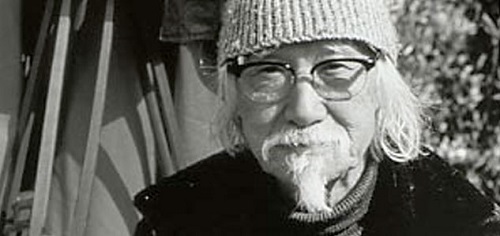
There is a large Seijun Suzuki retrospective starting in São Paulo this week at the Moreira Salles Institute with 17 features including 15 35mm prints. To mark the date, I’m choosing Suzuki to start a new section in the blog for annotated filmographies. The first part here covers the period between 1956 and 1963, in through 7 years he shot around 30 cheap films for Nikkatsu studios (21 of which are covered below). This is a very enriching exercise given that Suzuki oeuvre remains only known through a few key works, above all Tokyo Drifter and Branded to Kill, two eccentric masterworks of Yakuza cinema, and there are many distortions and questionable perceptions around these films, particularly those of this “less mature” period. The second part should arrive on Wednesday, covering another 24 films between 1964 and his final 2005 feature.
Pure Emotions of the Sea (1956)
Suzuki’s second film, a harbor romance, based on a song by lead actor Hachiro Kasuga (many of Suzuki’s early films are vehicles for local young pop stars). It has a very strong ambiance, good musical numbers and comic scenes. It is essentially a get a foot in the industry film, but it is enjoyable and only 48 minutes.
Inn of the Floating Weeds (1957)
Kagusa also inspired Inn of the Floating Weeds, despite only playing a supporting part, and the mood here is far more sober. A revenge tale set at the borders of Yakuza, very raw and desperate. The portrait of Japanese youth without perspective is cruel. Suzuki’s Nikkatsu period quality varies a lot according to his materials, despite Inn of the Floating Weeds’ script be nothing special, he seems specially engaged here with a belief that there’s something apocalyptic behind its plot.
Eight Hours of Terror (1957)

Eight Hours of Terror is Suzuki’s best movie in the years between 1956 e 1962, and I must admit to never quite understand how it remains so obscure in his filmography. It is one of his movies that more directly connect with the key works of Japanese New Wave, and the central bus ride (a sinister version of Buñuel’s Subida ao Cielo and Hitchcock’s Lifeboat) has a strong allegorical feel. The bus ends under siege from gangsters, and a cornered Japanese society must react. Very funny and cruel. It is less a thriller than a portrait of a panicked country, and a vehicle for the political possibilities of the filmmaker’s fragmentation and aggression.
Underworld Beauty (1958)
It must be the earliest Suzuki film that is easy to find on western home video, and it is easy to understand why, given how post-war American thrillers influences are very pronounced. Like Inn of the Floating Weeds, it is about a return to society after years in jail, but on this one it is more about reparations than revenge. Some great details and moments of nasty violence. At this point, Suzuki is yet to fragment narrative, but already has a great time to find ways to move individual moments towards unexpected paths.
The Boy Who Came Back (1958)
Another of early Suzuki portraits of youth. On this one, the boy from the title is coming back from reform school and trying to keep things honest, but the gangs remain putting pressure on him. There’s something on the social portrait that brings to mind early Nagisa Oshima, but in a more sentimental key. The major reference point was probably Nicholas Ray and by now Suzuki reveals himself a good disciple at aggressive and expressive framing. With 98 minutes, this is almost an epic by early Suzuki standards.
Voice Without a Shadow (1958)
The early going suggest Rear Window through sound (the dispositif is a remembrance of a criminal’s voice) decades before Blow Out, so it is a shame it settles into a far more ordinary investigative film. The formal merits don’t sustain the intrigue for long. It is not without its interests, but the Japanese film industry from the period has many better and engaging B thrillers, some signed by Suzuki himself.
Age of Nudity (1959)
Another movie on wayward youth. A coming of age one in which juvenile delinquency crosses path with adult criminality. The strongest aspect is Suzuki empathy towards his young characters and his refusal to pass much in a way of moral judgement in a very practical world. Terrific use of scope and only 53 minutes.
Take Aim at the Police Van (1960)

Investigative conspiracy film. I think it was my friend Guilherme Gaspar who describe it with “and by the middle of the film I had no idea what was going on, so I knew it was really a Suzuki film”. It is certainly one of his first movies in which the taste for privileged individual moments over routine narrative takes over. The effect reinforces its disorientating quality, the certainty that one is pushed towards an oppressive crime world without escape.
The Sleep Beast Within (1960)
In a certain way, a perfect complement to Take Aim at the Police Van. Again, a crime underworld crashes with respectable Japanese society. In both movies, there’s the same suggestion that the distance between the ordinary Japanese and criminal world from Nikkatsu films is very small. Suzuki’s eye for composition is in form, and it is one of his more direct attacks on post-war Japan.
Smashing the O-Line (1960)
Another of Suzuki’s early routine thrillers, in this one an amoral journalist is put in a dilemma when his personal life slides towards the underworld. Like Take Aim at the Police Van, the fragmentary style reinforces a disorienting and oppressive world. Some very good action scenes.
Everything Goes Wrong (1960)

Among Suzuki’s youth films, Everything Goes Wrong is the most bitter and devoid of hope. The violence is more pronounced, the characters swamped by the underworld. There’s no escape, no exits, it is like everything already gone very wrong in Japan way before the characters been born, for them, it remains just to stage the destruction in the ruins. One of the great ideas is that Suzuki shoots everything like one of his action thrillers. The retrospective synopses make a connection with Oshima’s Cruel Tale of Youth and that does make sense, but here everything is fast and cheaper, closer to the character’s world.
The Fighting Delinquents (1960)
Wayward youth with a plot that reinforces economic disparity. It is far more moralistic than most Suzuki films, and it never manages to fully dramatize the conflict. It was his first color work.
Tokyo Knights (1961)
Like many early Seijun Suzuki films, it is a vehicle for one of the young pop stars under Nikkatsu contract, in this case Koji Wada (who also played the lead in The Fighting Delinquents, A Hell of a Guy and The Wind of Youth Crosses the Mountain Pass). He inherits the family construction business and learn they have a foot on organized crime. Suzuki treats the material in a lighter and inconsequential key, but finds many creative ideas to keep the audience engaged.
A Hell of a Guy (1961)
I assume Wada must’ve animated little of Suzuki’s creativity, given that their movies together have less energy than others from this period. The most interesting thing about A Hell of a Guy is the absurd humor it locates in the conflict, given the young age of its main characters and the very serious world of criminality they are involved on. It is talkier than one expect from a Suzuki movie, and the big brawl scenes that are supposed to be the main hook lack the dynamism one comes to expect as well.
The Man With a Shootgun (1961)

Seijun Suzuki shoots a western! Repeat: Seijun Suzuki shoots a western! There’s something of Yojimbo in how the wanderer gets involved in the town’s plots, and Suzuki’s creativity is very animated by the possibilities of adapting the American genre for a Japanese space. The location shooting and scope framing are top-notch as well, the former in particular stand out in contrast to the urban spaces and studio bound settings of most Nikkatsu movies from the period. Great action scenes. One of Suzuki’s most joyful movies.
The Wind-of-Youth Group Crosses the Mountain Pass (1961)
The best among Suzuki 1961 films with Wada pretty much because it is the least consequential. This one is about a middle class Young man who joins a circus fair during his vacation and nothing more. It barely tries to create some conflict, but has a very likable atmosphere. The circus world clearly raises Suzuki sympathies.
Teenage Yakuza (1962)
This is not the most creative among Suzuki’s films, but he milks a lot out of the teen vigilante premise and his formal control, above all else dynamic framing and expressive sets, combine to produce a very exciting action film.
Detective Bureau 2-3: Go to Hell Bastards! (1963)
Joe Shishido had small parts in The Boy Who Come Back and Voice Without a Shadow, but it is here that one of the most beautiful love stories between a filmmaker’s camera and his leading man starts. There’s something about Shishido’s deviant smile that very much animates Suzuki’s gaze. Detective Bureau 2-3 is one of those Suzuki films that erases the space between violent film noir and the musical, given how Suzuki sees no difference in staging one or another. It is edited, so every cut counts as a slap in the audience’s face. And also one of those Japanese society upside down portraits that more than justify the secondary title “Go to Hell Bastards!”.
Youth of the Beast (1963)
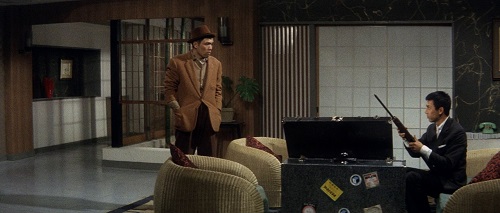
Yojimbo in the land of troglodytes. Ruy Gardnier in the retrospective critical synopsis describes Youth of the Beast as a turning point in Suzuki’s oeuvre towards his more mature phase with his more eccentric ideas pushing the film towards a larger abstraction, I disagree as that tendency is already clear in previous works and much like in them, it is anchored by the ideas behind it. That said, Youth of the Beast is one of the half a dozen unquestionable masterpieces that Suzuki made, so it is clearly a key moment. It is a film of large sourness and a portrait of a sick, violent world where even Shishido’s instigator is just another brutal thug. If the plot suggests Kurosawa’s classic, there will not be here a single drop of honor. In Youth of the Beast’s world, there are not even victims, only more violence.
The Incorrigible (1963)
There’s something in this study of juvenile delinquency that anticipates Fighting Elegy in its efforts of thinking about the relationship between youth violence and fascism. Despite the routine script, it is one of his more ambitious early movies, with creative sets and a desire to break with the youth film expectations.
Kanto Wanderer (1963)
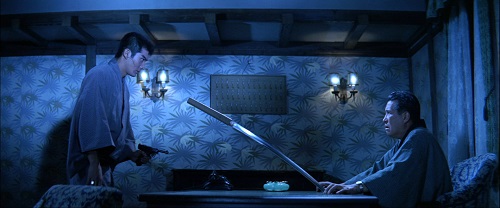
A classic “there’s no more honor among Yakuzas” film. Some of the most creative use of sets in Suzuki’s career. It is two films in one, there’s the plot one that follows the betrayal and reversals of the intrigue, and the one from Suzuki’s imagination, an almost musical choreographed in the meeting of light, sets and the movement inside the frame.
 Anotacões de um Cinéfilo